US cups versus metric cups
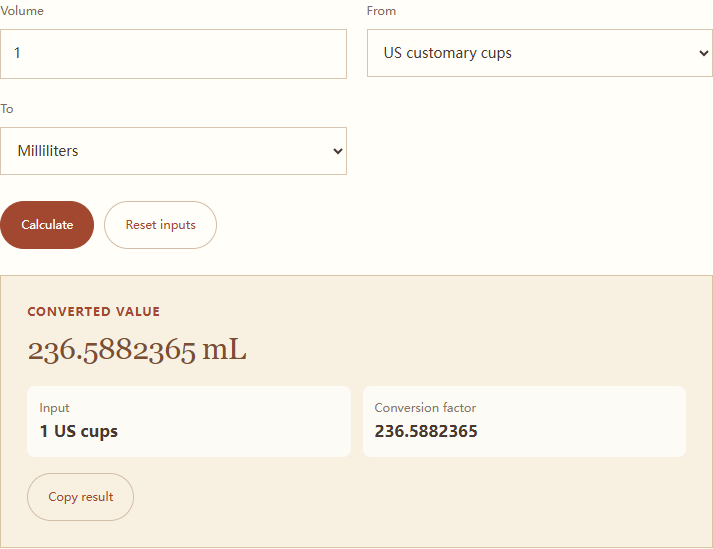
Home cooks bump into “one cup” as if the world agreed on a single vessel. It did not. KitchenScale treats a US customary cup as 236.5882365 mL and a metric cup as 250 mL. Tablespoons and teaspoons follow the US customary relationships coded in the converter. That honesty matters when a US blog, a British older book, and a modern metric cookbook sit on the same shelf. Volume conversion here is about liquid and measuring-cup capacity. It does not weigh flour for you; density still belongs to the ingredient-weight tool or a scale.
Situations that fit
- Translating a US cup-based batter into milliliters for a metric jug.
- Checking whether the cup marks on a jug match US or metric assumptions.
- Converting tablespoons and teaspoons when a travel kitchen has spoons but no scale.
- Spotting “one cup” ambiguity in international recipes before the batter goes wrong.
- Teaching students why two cups of water are not the same milliliters worldwide.
US cup, metric cup, and spoons
US cup ≈ 236.59 mL. Metric cup = 250 mL. The gap looks small in a single spoon of vanilla and looks large across four cups of stock. US tablespoon and teaspoon relationships on this page follow the customary kitchen set used by the site engine; brand spoons still vary a little in the drawer. Australian metric tablespoons historically differ again—when a recipe states its country, believe that note over a generic spoon.
Worked example
A US pancake recipe wants 2 cups of milk. In milliliters that is about 473.18 mL. The same “2 cups” in a metric-cup cookbook is 500 mL. The 27 mL difference will not ruin every dish, but in baking ratios it adds up across flour, sugar, and liquid together. Write which cup definition you used on the recipe card so next Saturday-you does not reverse the conversion.
Weighing versus volume
Water is the friendly case: milliliters and grams nearly match. Flour, cocoa, and shredded cheese do not. Level versus heaping scoops change dry volume more than people admit. If the dish is sensitive, convert volume to a working milliliter figure for liquids, and prefer grams for dry baking ingredients.
Common mistakes
- Assuming older UK cup references match modern US cups.
- Treating a mug as a measuring cup.
- Heaping dry goods while the recipe author leveled.
- Converting cups to grams with a single density for every ingredient.
- Mixing US spoon math with metric cup math in one batter without noting it.
Limits and disclaimer
This page converts cooking volumes. It does not settle nutrition labeling, bartending free-pour accuracy, or laboratory glassware tolerances. Use the ingredient-weight tool when grams are the real goal.
Which cup should I pick?
Match the recipe’s origin: many US blogs mean the US cup; many modern metric books mean 250 mL. When unsure, look for mL printed beside the cup amount.
Are culinary teaspoons exact?
This page uses coded US relationships. Drawer spoons still vary slightly by brand; leveling technique matters for baking powder and salt.
What about imperial pints?
Not the focus here. Convert through milliliters if a recipe cites pints, and confirm whether the pint is US or imperial.
Does this weigh brown sugar?
No. Packed brown sugar needs a weight reference or a scale. Volume marks alone mislead.
Alcohol proofs and cocktail jigger standards?
Not handled here. This converter is for kitchen volume units listed on the form.