Scaling a recipe by servings
Recipe math is mostly a ratio: multiply each ingredient amount by (target servings ÷ original servings). KitchenScale keeps that factor visible so you can scale a soup for guests or shrink a cake for a weeknight without rewriting the card by hand. Linear scaling is a strong starting point for many stews, batters, and salads. It is not a promise that yeast, salt, thickeners, or cook times will behave politely at every batch size. Taste, pan choice, and food safety still sit with the cook.
Situations that fit
- Doubling a lentil soup when two extra friends text that they are staying for dinner.
- Halving a loaf-cake batter so it fits a smaller tin without towering over the rim.
- Converting a card written for 4 servings into a 6-serving plan for meal prep boxes.
- Batching freezer chili where the spice blend needs a second taste after scaling.
- Teaching ratio reasoning to a new cook who wants the arithmetic out in the open.
Weighing versus volume while you scale
If the original recipe lists grams, scale grams. If it lists cups, you can scale cups, but scooping variance grows with the batch. For baking, prefer weighing after you convert cups with a trusted density or with the ingredient-weight tool. Eggs are awkward: 2 eggs × 1.5 is 3 eggs, which works; 2 eggs × 1.25 is messy—use beaten weight when precision matters. Seasonings often want a lighter hand on first cook of a large batch, then adjust.
Formula
factor = target servings ÷ original servings; each amount × factor
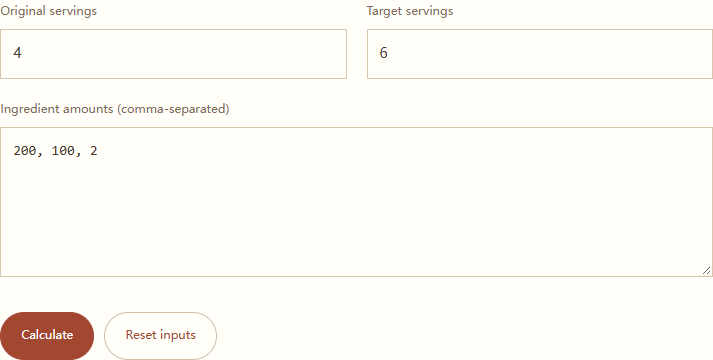
Enter original servings, target servings, and a comma-separated list of amounts. Every amount receives the same factor. Units travel with you: the tool multiplies numbers; it does not invent grams from cups.
Worked example
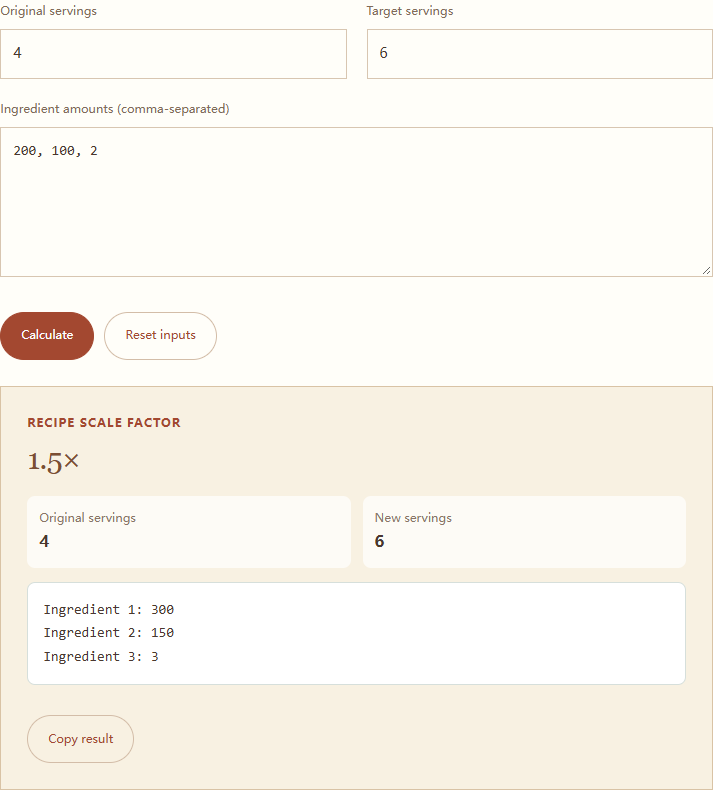
A pasta bake lists 4 servings with 200 g pasta, 100 g cheese, and 2 eggs. You want 6 servings. Factor = 6 ÷ 4 = 1.5. Scaled amounts: 300 g pasta, 150 g cheese, 3 eggs. If the bake dish is unchanged, watch thickness and oven time; more mass in the same pan usually needs longer heat even when the ratio is correct.
Common mistakes
- Scaling yeasted doughs blindly without watching fermentation and dough strength.
- Multiplying salt and hot chili 1:1 on a huge batch without tasting mid-way.
- Changing servings but forgetting to change pan size, then overflowing the tin.
- Scaling a marinade as if it were a stew; surface area of protein does not always track servings.
- Assuming cook time scales with the same factor as ingredients.
Limits and disclaimer
Pan size, oven spring, emulsion stability, and food-safety times are not solved by the factor alone. KitchenScale does not provide nutrition analysis, allergen advice, or process authority. Use the scaled list as a clear shopping and prep sheet, then cook with judgment.
Can I enter multiple amounts?
Yes. List amounts in the input; each scales by the same factor. Keep a side note of which number is flour, sugar, or oil.
Volume versus weight?
Prefer weighing when precision matters. Cups vary with scooping style, humidity, and how you level the cup.
Is this nutrition analysis?
No. It only scales quantities. Labels and lab data remain the source for nutrition claims.
What about spices?
Start slightly under on aggressive spices for large batches, taste, then add. Sweet spices are often closer to linear than chili heat.
Can I scale to fractional servings?
Yes, if the math helps—for example 4 to 5 servings is a 1.25 factor. Awkward egg counts may need weighing or an extra yolk decision.