Cups to grams with reference densities
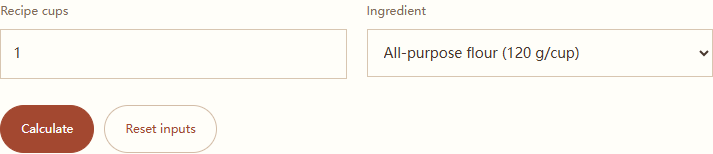
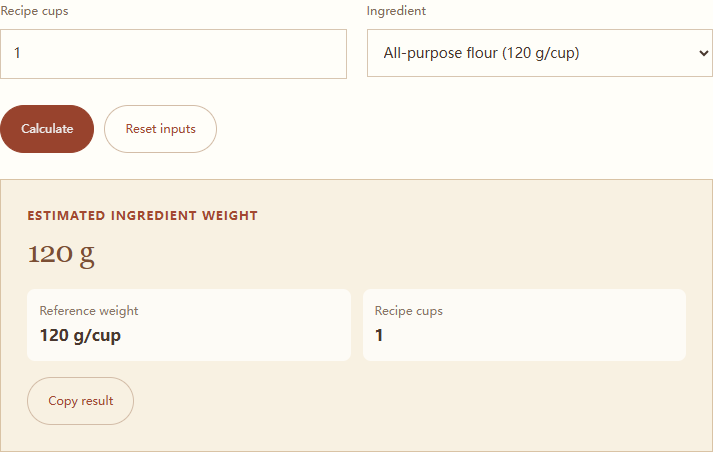
When a recipe says “cups” and your brain (and scale) want grams, you need a density assumption. KitchenScale multiplies US cups by an explicit reference grams-per-cup for common pantry items such as flour, sugar, butter, water, and rice. Those references are teaching values meant to be visible, not a laboratory certificate for the bag in your cupboard. Scooping style, humidity, and sifted versus packed flour can move the real mass by a noticeable margin. For critical baking, weigh once, write the gram number on the card, and stop arguing with cups.
Situations that fit
- Moving a cup-based muffin batter onto a kitchen scale before a bake sale.
- Comparing how your scooping style lands against a published grams-per-cup note.
- Rough rice batching for weekly meal prep when the bag instructions speak in cups.
- Checking butter volume sticks against gram markings on a wrapped block.
- Classroom demos that show why sugar and flour are not interchangeable by volume.
Why weighing beats volume for many bakes
Volume measures how much space you filled. Baking chemistry cares about mass. A cupped heap of flour can swing tens of grams between two cooks using the same tin cup. Reference densities get you into a sensible gram neighborhood quickly. They do not replace the manufacturer’s weight if the package prints one, and they do not erase the difference between bread flour, cake flour, and icing sugar.
Worked example
You need 1.5 US cups of all-purpose flour. The reference on this tool uses 120 g per cup. Estimate: 1.5 × 120 = 180 g. If you spoon and level lightly, you might land near that. If you dip the cup into the bag and pack, you might see 200 g or more on the scale. For the cake, prefer the 180 g target (or the cookbook’s own gram line) and adjust hydration only if the batter clearly disagrees.
Ingredient notes
Granulated sugar packs denser than flour. Brown sugar depends on how firmly you pack the cup. Butter references assume a typical solid state, not melted foam. Water is the straightforward case. Rice varieties differ; treat rice figures as meal-prep helpers, not sushi-rice law. Gluten-free blends vary wildly—prefer package weights.
Common mistakes
- Treating scooped flour like spooned-and-leveled flour.
- Using one density for bread flour and icing sugar.
- Forgetting that toasted nuts and chopped nuts fill a cup differently.
- Scaling a density meant for US cups while measuring with a 250 mL metric cup.
- Trusting a blog density that never states spoon-and-level versus dip-and-sweep.
Limits and disclaimer
These are published baking-reference weights. Ingredient packing, product and technique can change the mass in your own cup. Use the recipe author’s gram amounts or weigh the ingredient when precision matters.
Why not one density for everything?
Sugar packs denser than flour; fats and water differ again. One constant would smuggle error into every batter.
Packed brown sugar?
Not modeled as a separate packing mode here. Weigh when the bake is sensitive to molasses-rich sugar mass.
Gluten-free blends?
Densities vary widely across brands. Prefer the package weight or your own scale diary.
Which cup convention?
These values use the linked baking chart’s ingredient measures. They are not physical density measurements or a claim that one recipe cup of water equals an exact US customary cup of water. For exact fluid-volume conversion use Cooking Volume; for an exact ingredient amount use a scale.
Can I use this for nutrition apps?
Only as a rough kitchen estimate. Nutrition databases and labels remain the proper sources for tracking.
Published reference values
The table follows the King Arthur Baking Ingredient Weight Chart: all-purpose flour 120 g; granulated sugar 198 g; butter 113 g per half cup, giving 226 g for this one-cup model; water 227 g; uncooked long-grain rice 198 g. The butter value is a calculation from the published half-cup entry.
These are recipe reference measures rather than verified densities for every product. The cooking-volume converter uses exact unit factors separately; do not substitute its millilitre output for an ingredient mass.